
 This is a very difficult post to write, in some ways it’s like coming into the open after hiding for years — the proverbial coming out of the closet. Though some people may say all I do is complain, I really try hard not to whine about myself. Remember I said that if I could do a post about living with chronic pain without whining or whingeing I would — this is that post.
A friend sent me a number of links, hoping I’d do a post about fibromyalgia. The first link she sent was an article in the New York Times “Drug Approved. Is Disease Real?” by Alex Berenson. (You’ll need to have an account to read the article but it’s free.) While the article is nominally about Pfizer’s drug Lyrica which has just been approved for use in managing fibromyalgia pain, it mainly insinuates that fibromyalgia is not a disease and that we’re a bunch of whiners who need to suck it up — at least that’s a major part of the subtext. The sugar coating is that maybe fibromyalgia is a problem, but it’s not a disease, and besides no one knows how to identify it or why it happens — not much sugar after the insult.
Fibromyalgia is a real problem that’s faced by many people. You have good days and bad flare days. There are times when you just don’t want to move because the effort and the pain are just too much to face. The problem is that there is no definitive test to take where the results will come back and say, “congratulations you’ve got fibro”. No, it’s a diagnosis that’s usually determined by exclusion. In other words, once they’ve tested you for everything else and haven’t found anything, well, fibro is what’s left and that’s what you got. That’s the reason that it’s so hard to define — since it’s a catchall diagnosis after everything else turned out to be nothing — fibro is probably a lot of different diseases and conditions that have gotten lumped together because they all have the same basic symptoms: pain, tiredness, achiness, and more pain.
The article says that calling it a disease gives people permission to be ill. I beg to differ. What it does is give a person some legitimacy — doctors/medical staff finally start listening to you rather than just marking your folder with whatever code they use for troublesome patients. Yes, we tend to be whiners and complainers to our health providers, who wouldn’t be — we want the pain to stop, if not completely at least for long enough to catch our breath and move on. I had years of being pooh-poohed before fibromyalgia was recognized. Have I changed? No, I’m still me — still coping. But at least now, I have some backing that my list of symptoms are not all in my head.
What I’d like you to do now is read this great essay on what it’s like to live with chronic pain. Written by Christine Miserandino, “The Spoon Theory” is the best way of explaining to those who don’t deal with chronic illness, just how totally chronic pain impacts a person’s life. Everyday, you have things you need to do, things you want to do, and things you hope to do. You balance the needs and wants — hoping that you can maintain a semi-normal life. (Go ahead, take your time then come back and finish this post.)
Back from reading the essay? When you go to the doctors and talk about pain, you’re always asked, “On a scale of 1-10 what would you say your pain is like now?” That question always threw me. I figured that if a 10 was the worst pain there is then I must be a 3 or maybe 4 if it really bothers me. Then I found the Mankoski Pain Scale. This pain scale (the usual 1 to 10) gives examples for each level so that you know how to answer. On this scale a normal, pretty good day, for me, is usually a 4 with occasionally forays to 5. With a migraine or on a bad flare day, it’s probably an 8. I have occasionally been up to a 9 and I don’t like being there — not that anyone would. I print out this pain scale and bring it to my doctor’s appointments so we’re both on the same page when we talk pain. The other problem is that here in the United States, where I live, pain is under-treated. It’s very difficult to convince a doctor to prescribe anything for pain, especially chronic pain, because if they prescribe too many painkillers they can be audited and their licenses suspended. So, most of us just learn to live with it and use the painkillers we do get very, very sparingly (like when you hit an 8 or 9 day).
I don’t look ill so most people don’t realize that I live with chronic pain — well unless it’s a walk-with-a-cane day. Sure, I talk about my allergies — lots of people have those. Sometimes I’ll mention I have migraines, especially if I’m finding it difficult to concentrate while conversing with someone. On the other hand, I finally had to quit my job because there was no opportunity to telecommute — I can work a full day just not 9-5 — I need breaks and sometimes lots of them. I’m lucky I found work I could do at home — freelance writing, copy editing, and proofing. It’s not as much pay as being a computer analyst but it’s a lot less stress and now leaves me with more spoons (if you don’t understand this reference, go back and read the essay) than I used to have so, I can sometimes enjoy going out and being with people — and being normal (for certain definitions of normal).
 Today I sewed in the ends and finished a pair of UFO socks. These socks were the ones that I found moths had eaten a couple of holes in. I frogged until I got below the eaten holes, clipped out the bad yarn, reattached and started knitting again. I also had a brain storm and decided to do upside down heels — the socks were toe-up but I put in a regular heel making no changes for doing them from bottom up so the thicker bit is under the heel.
 Sunday, Feb 3rd saw the airing of Miss Austen Regrets as part of the Masterpiece Theater’s Complete Jane Austen series. This is one that I’ve never seen before in any media so I have nothing to compare or contrast it to. It’s based on the correspondence of Jane Austen and while I’ve had “read her letters” on my list of things to do before I die — I haven’t gotten to it. The closest I’ve come is the page of
  Wow, times certainly does fly when you’re under a deadline. Towards the end of any month, I get a bit frazzled and let things go, like my blog posts, in order to get the zines up and live on time. SFRevu and GumshoeReview both go live on the first of the month.
  Next up — remember I’ve missed posting for a few days — I finished my first sock making a normal heel but on a toe-up sock so the heel is essentially backward. What that means is that the thicker part of the normal sock heel which usually goes along the back of the heel from bottom of foot up the back of leg is now under the heel against the floor.
  Here’s a close up (sorry, it’s a bit fuzzy).

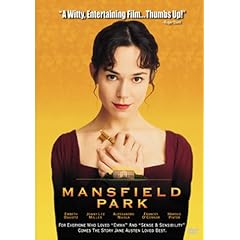 (DVD cover pictured to the left). While that one was indeed a nice movie, it didn’t have the flavor of Austen and had been considerably modernized for feminine equality and sensibilities. Unfortunately, Jane Austen wrote for her times not ours and while many of her women are strong characters, they acted within the bounds of class and society in which they found themselves.
 It turns out that some people